Which Raw Materials Are Restricted by The EUDR?

The raw materials restricted by the EU Deforestation Regulation (EUDR) are cattle, cocoa, coffee, oil palm, rubber, soya, and wood. These commodities are prohibited from entering the EU or Northern Irish markets unless proven to be completely deforestation-free.

This is a paradigm shift in customs compliance. It is effectively a "guilty until proven innocent" regime. Without the precise geospatial coordinates of the specific plot of land where the raw material was harvested, your goods cannot clear customs. We provide the technology and strategy to map this complex data seamlessly.

Which Commodities Are Affected by the Ban?

The core focus is on seven specific commodities identified as the primary drivers of global deforestation: Cattle, Cocoa, Coffee, Oil Palm, Rubber, Soya, and Wood

Crucially, this regulation applies to Derived Products. It is not just about raw timber; it is about the paper, packaging, furniture, or printed books derived from it. It is not just about cocoa beans; it is about the chocolate bar.

The regulation follows the ingredient, not just the raw material.

Important Scope Update

While the regulations strictly monitor derivatives like palm oil derivatives and instant coffee, some refined sub-products (such as certain grades of raw leather) have been exempted from the latest EUDR texts to simplify compliance. However, if you cannot trace an in-scope active ingredient back to its exact plot of land, the finished product is banned.

What is the "Polygon" Requirement?

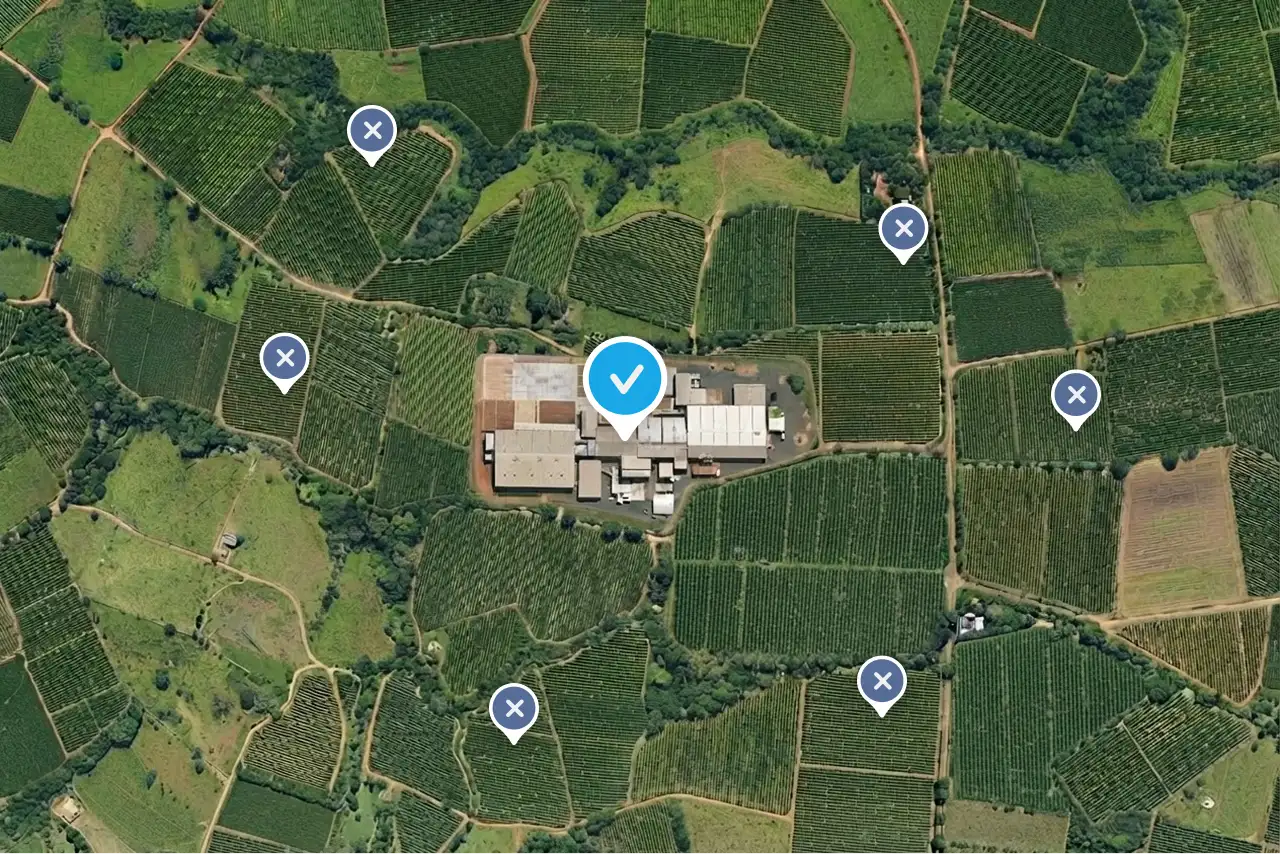
The "Polygon" is a strict mandate requiring importers to submit the precise geolocation coordinates (latitude and longitude) of the land where the raw materials were produced.

For plots of land larger than 4 hectares, a single GPS point is not legally sufficient; you must provide a Polygon (a digital shapefile outlining the exact perimeter of the farm). This data must be cross-referenced against satellite imagery to prove that no forest cover has been lost on that land since the cut-off date of 31 December 2020.


Why is the "Due Diligence Statement" Critical?

The Due Diligence Statement (DDS) is the legal declaration you must upload to the EU Information System before your goods arrive at the border.

By submitting a DDS, you accept legal liability and confirm three key pillars:

The goods are Deforestation-Free

Produced on land not subject to deforestation or forest degradation after 31 December 2020.

The goods are Legally Produced

Sourced in full compliance with the relevant local laws of the country of production.

The goods are covered by a Due Diligence System

Backed by structured risk assessment and mitigation data.

Who is liable for compliance?

Under the EU's updated compliance framework, liability is clear:

The Primary Operator

The company that first places the product on the EU market (or exports it) holds the sole responsibility for submitting the initial Due Diligence Statement.

Downstream Operators & Traders

Following the EU’s simplification review, downstream businesses do not need to file redundant, separate statements. Instead, they must collect, verify, and retain the Reference Numbers of the original DDS filed by their suppliers.

There's a Chain of Custody Rule

If you are a UK business selling into the EU or Northern Ireland, you must provide these Reference Numbers to your European distributors. If the digital chain of custody breaks, your products will be blocked at the border.

Case Study: The Unmapped Chocolate Bar

What Does a Supply Chain Blockage Look Like?

A real-world scenario demonstrates the consequences of missing supply chain data.

The Unmapped Chocolate Bar

How missing farm-level traceability can turn a finished product into a market-access problem.

Download Case Study

GB FRC

How does this impact the UK market?

UK businesses face a dual compliance challenge. While exporting to the EU or moving goods into Northern Ireland requires strict EUDR compliance by 30 December 2026, domestic UK legislation is also arriving.

The UK's Forest Risk Commodities (GB FRC) regime is set for legislation in 2027.

FeatureEUDR (EU & Northern Ireland)GB FRC (Great Britain)
Go-Live Date30 December 2026 (Large/Med) / 30 June 2027 (Micro/Small)Expected 2027
Business ScopeAll operators placing goods on the EU/NI marketGB businesses with annual turnover over £1 million
Legal StandardDeforestation-Free (Zero deforestation, legal or illegal, after Dec 2020)Legality-Based (Focuses on preventing illegal deforestation, moving to deforestation-free in due course)
Data RequirementsExact polygon mapping and satellite cross-referencingIntended to align closely with EUDR to minimise duplicate reporting for UK firms

Preparing your supply chains for EUDR’s digital mapping standards automatically future-proofs your business for the UK's upcoming 2027 domestic FRC laws.

Compliance can be complex.

Get in touch with one of our friendly experts for advice.

Glossary

Which terms must you know?

Deforestation-Free: Products produced on land that has not been subject to deforestation or forest degradation after 31 December 2020.

Geolocation Polygon: A digital shapefile showing the exact boundary of a production plot. Mandatory for any sourcing plot larger than 4 hectares.

Legality Requirement: The mandate to prove that commodities were produced in strict accordance with the local land-use, environmental, and labour laws of the country of origin.

Downstream Operator: A business further down the supply chain that processes or distributes products already covered by a primary Due Diligence Statement.

Primary Operator: The natural or legal person who first places relevant products on the market.

Related Resources